The International Council for Small Business (ICSB) is proud to announce the ICSB Golden Book Awards for 2025–2026, celebrating the Top Five Essential Books shaping the future of entrepreneurship, innovation, and small business leadership.
This year’s selection reflects the dynamic nature of knowledge itself. Three powerful new titles have entered the list for 2025–2026, while two exceptional works from the 2024–2025 cycle have retained their place—a rare achievement that speaks to their lasting relevance and influence. As the bar continues to rise, we now turn our attention to identifying the next generation of serious contenders capable of challenging even the strongest of these distinguished works.
Each honored book has undergone rigorous review by ICSB and features an in-depth President’s Review that recognizes its intellectual depth, originality, and practical impact. While the Golden Book Awards do not rank these titles, they are celebrated equally for their remarkable contributions to scholarship, entrepreneurship, and global MSME development. Together, these five works form an essential reading list for leaders, educators, policymakers, and entrepreneurs navigating an increasingly complex world.
Book ONE
Author:
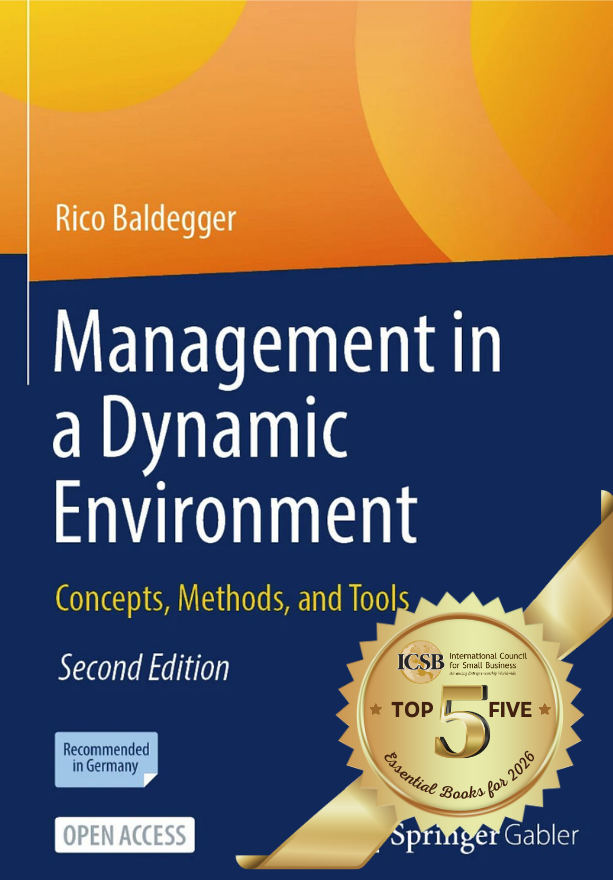
Rico Baldegger, ICSB Board Member, Research Professor at Suffolk University
About the Book:
This open-access textbook delivers essential management knowledge in a clear, structured, and highly practical format. It introduces a comprehensive enterprise model that helps readers navigate core management concepts, critically reflect on them, and apply new approaches with confidence. Each chapter bridges theory and practice through real-world examples, interpretation questions, and short case studies.
The second edition expands its focus on sustainability, corporate responsibility, and circular business, and updates company cases (including UBS, Rolex, Nestlé, Logitech, Netflix, and Ferrero). It also integrates media as stakeholders, incorporates PESTEL environmental factors, and strengthens the chapter on corporate culture with modern leadership models.
Widely adopted across universities in Germany, Austria, and Switzerland, the book offers valuable insights for both emerging and experienced managers seeking practical, contemporary guidance.
President Review:
In this remarkable work, Dr. Rico Baldegger offers a gift of rare clarity to the modern world of management. With a scholar’s precision and a leader’s wisdom, he distills complexity into a coherent and commanding vision of the enterprise — one that guides, steadies, and elevates all who encounter it.
This new edition unfolds with quiet authority, embracing sustainability, responsibility, circular thinking, and enlightened leadership as the defining pillars of contemporary practice. Through carefully chosen examples and thoughtful reflection, the book speaks not only to the intellect but to the conscience of leadership itself.
It is not merely a book of instruction, but a work of enduring counsel — crafted to shape minds, awaken purpose, and serve as a trusted companion for generations of leaders and entrepreneurs who seek to build organizations of meaning, resilience, and lasting impact.
Book TWO
Author:
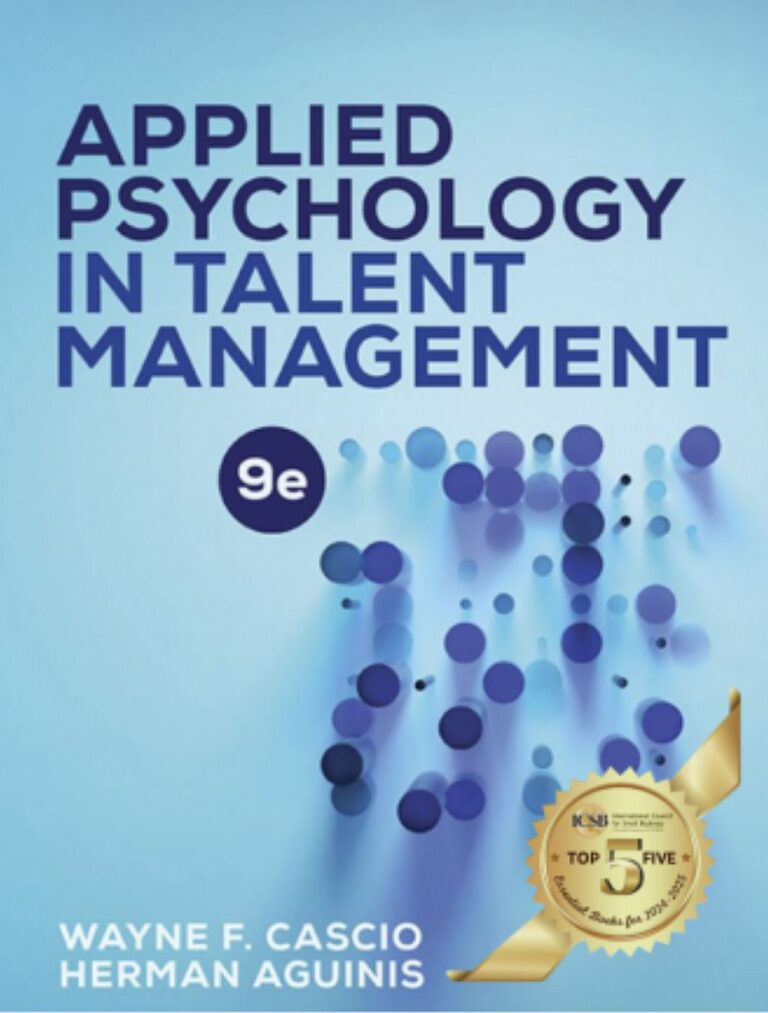
Wayne F. Cascio – University of Colorado, Denver, USA
Herman Aguinis – The George Washington University School of Business, USA, The George Washington University
About the Book:
In the Ninth Edition of Applied Psychology in Talent Management, world-renown authors Wayne F. Cascio and Herman Aguinis provide the most comprehensive, future-oriented overview of psychological theories and how they impact people decisions in today’s workplace. Taking a rigorous, evidence-based approach, the new edition includes more than 750 new citations from top-tier journal articles. Integrated coverage of technology, strategy, globalization, and social responsibility throughout the text provides students with a holistic view of the field and equips them with the tools necessary to create productive, enjoyable work environments.
President Review:
In the Ninth Edition of Applied Psychology in Talent Management, Professors Wayne F. Cascio and Herman Aguinis deliver what is quite simply the most authoritative and future-ready roadmap for understanding how human behavior, data, and decision-making shape organizational success in the modern economy. At a moment when talent has become the primary competitive advantage of enterprises large and small, this book offers leaders, scholars, and students an indispensable framework for navigating complexity with clarity, evidence, and purpose.
What makes this edition especially compelling is its rigorous integration of science and practice. With more than 750 new citations from top-tier journals, the authors elevate the conversation beyond trends and intuition, grounding talent management in robust empirical foundations. At the same time, the book speaks directly to the realities facing today’s organizations—technological disruption, global competition, ethical responsibility, and the growing demand for human-centered leadership. This rare balance between analytical depth and real-world relevance is what positions this text as the definitive reference for the next generation of organizational leaders.
Book FOUR
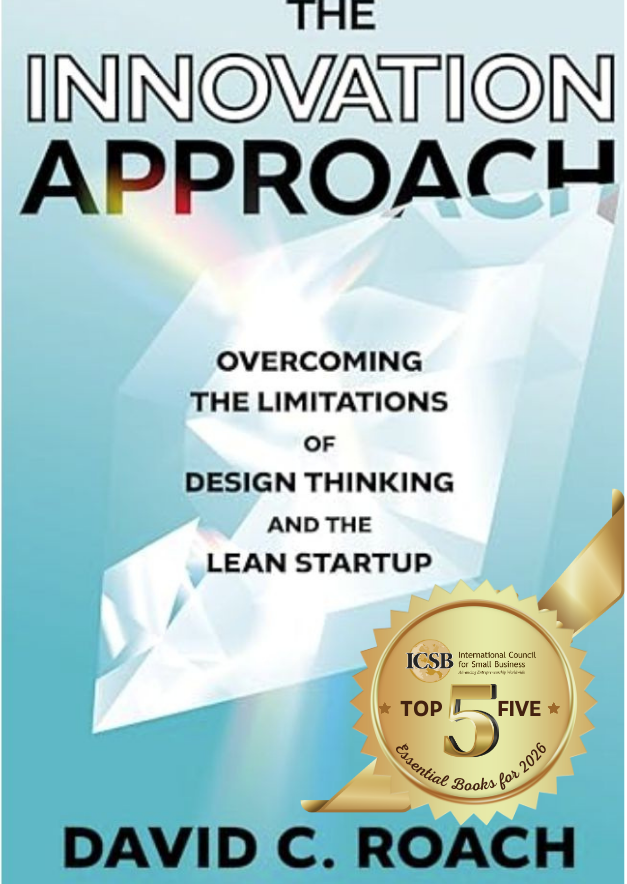
Author: David C. Roach who is an Associate Professor within the Faculty of Management at Dalhousie University, Canada. In addition to sitting on the Board of Directors and acting in an advisory capacity for enterprises in Canada, he is also Co-founder, President and CEO of DMF Medical Incorporated, a MedTech company focused on making anesthesia safer.
About the Book:
Innovation and entrepreneurship have always had a strong and synergistic relationship. While Design Thinking and the Lean Startup have emerged as popular methodologies for managing innovation and entrepreneurial endeavours, the time is ripe for a rethinking of the innovation approach by going back to core principles.
By considering the strengths and weaknesses of Design Thinking and the Lean Startup within their respective contexts, expert David C. Roach revisits the fundamentals of innovation management. Addressing the cultural gap between STEM and business perspectives, Roach emphasizes the importance of managing the front-end of innovation, where the most critical decisions are made, and concepts shaped. Demonstrating how Design Thinking’s enthusiasm for observational research can be particularly useful, while the Lean Startup’s passion for hypothesis-driven minimum viable product (MVP) testing is a clear strength, Roach argues that the success of innovation depends on a robust concept coupled with a realistic business model.
The Innovation Approach: Overcoming the Limitations of Design Thinking and the Lean Startup challenges the notion that brainstorming or constant pivoting can solve all problems. It demonstrates that when aspects of both these methodologies are embedded in a structurally sound innovation management approach, the results can be world-class.
Review of ICSB President:
Innovation and entrepreneurship have always moved in tandem, yet in recent years, the practice of innovation has become overly reliant on fashionable tools rather than enduring principles. In The Innovation Approach, David C. Roach offers a timely and intellectually rigorous reset. He does not dismiss Design Thinking or the Lean Startup—he elevates them by placing each within a disciplined, strategic framework grounded in the actual mechanics of value creation.
Roach’s central contribution lies in his focus on the front end of innovation—the fragile, formative stage where ideas are shaped, assumptions are tested, and the most consequential decisions are made. By bridging the cultural divide between STEM and business thinking, he reminds us that successful innovation is not born from endless brainstorming or perpetual pivoting, but from the patient construction of robust concepts supported by realistic business models. His integration of observational insight from Design Thinking with the empirical rigor of hypothesis-driven MVP testing reflects a mature understanding of how innovation must actually be managed in high-stakes environments.
At the International Council for Small Business, we consistently emphasize that entrepreneurship flourishes when creativity is matched with structure and imagination with execution. Roach captures this balance with clarity and authority. The Innovation Approach is not merely a critique of current methodologies—it is a blueprint for building world-class innovation systems that endure. I strongly recommend this work to entrepreneurs, executives, educators, and policymakers who are serious about mastering innovation in an era where disciplined creativity is the ultimate competitive advantage.
Book THREE
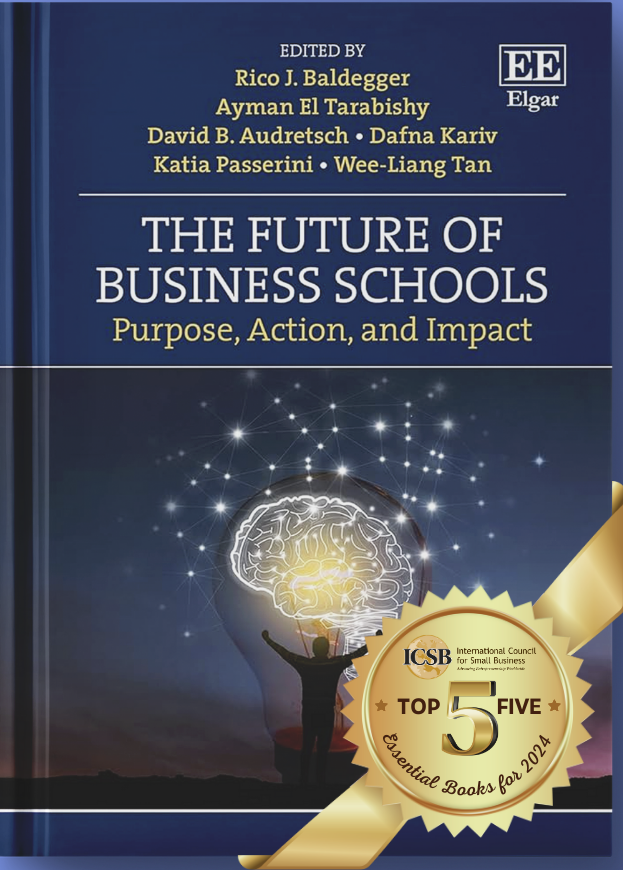
Edited by Rico J. Baldegger, Former Dean and Professor, School of Management Fribourg (HEG-FR), University of Applied Sciences & Arts Western Switzerland,
Ayman El Tarabishy, President & CEO, International Council for Small Business (ICSB), Deputy Chair, Department of Management, School of Business, The George Washington University, US,
David B. Audretsch, Indiana University, US and the Department of Innovation Management and Entrepreneurship, University of Klagenfurt, Austria,
Dafna Kariv, Professor of Entrepreneurship; Head of the dual degree Entrepreneurship-Business Administration, Adelson School of Entrepreneurship, Reichman University (RUNI), Herzliya, Israel,
Katia Passerini, Provost and Executive Vice President, Seton Hall University, South Orange, New Jersey, US and
Wee-Liang Tan, Associate Professor of Strategic Management, Lee Kong Chian School of Management, Singapore Management University, Singapore.
About the Book:
Are business schools on the wrong track? For many years, business schools enjoyed rising enrollments, positive media attention, and growing prestige in the business world. However, due to the disruption of COVID-19, many previously ignored issues relating to MBA programs resurfaced. As a result, MBA programs now face lower enrollments and intense criticism for needing to prepare future business leaders and pay attention to essential topics like ethics, sustainability, and diversity and inclusion.
The book The Future of Business Schools discusses these issues in three critical areas: complexity, sustainability, and destiny. How do we prepare students for a new and complex world? How can business schools focus on the planet’s sustainability, and how will they shape a better future for everyone? The chapters present views and suggestions of business school professors, researchers, and leaders from different contexts and countries, as well as ideas for business school stakeholders on topics from program structures, course content, and teaching materials to research topics. In addition to examples of innovations, tools are offered to help universities navigate complexity and prepare for uncertainty.
ICSB Immediate Past Chair Review:
A Visionary Exploration: The Future of Business Schools
Imagine taking a telescope and pointing it toward the stars. Through its lens, you see not just the dazzling sparkle of distant constellations but also the vast expanse of the universe. It allows you to traverse space and time, uncovering the mysteries of the cosmos while contemplating the future. This book serves as a telescope but examines business schools’ intricate past, present, and future instead of exploring the heavens.
Guided by Rico Baldegger’s expert editorial leadership and a team of distinguished contributors, this book explores the forces shaping business education. It delves into the evolution of business schools, their current challenges, and their potential futures, providing readers with a roadmap to understand and navigate the ever-changing academic and professional landscapes.
This is not just another book but a clarion call for introspection and innovation. It gives voice to faculty perspectives, shedding light on their experiences, insights, and aspirations for the future of business education. Doing so bridges the gap between academic leadership and the faculty at the heart of these institutions, making it a vital resource for business school deans, educational administrators, and policymakers.
The book goes beyond theoretical discourse to address the pressing questions facing business schools today. How can they remain relevant in an age of rapid technological advancement? What role should they address global challenges like sustainability, diversity, and ethics? How can they balance the demands of academic rigor with the need for practical, real-world impact? The answers offered in this book are grounded in deep research, practical wisdom, and forward-thinking vision.
This work is a beacon for those who believe in the transformative power of education. It challenges readers to rethink the purpose and mission of business schools, urging them to adapt, innovate, and lead in a world that demands agility and resilience. This book is essential for anyone who aspires to shape the future of business education.
In many ways, this book is a telescope that reveals what is and inspires us to imagine what could be. It guides understanding the past, navigating the present, and envisioning the future of business schools. Rico Baldegger and his editorial team have crafted a masterpiece that will resonate with academic leaders and faculty alike, ensuring its place as a cornerstone in the dialogue about the future of business education.
Book FIVE
Authors:
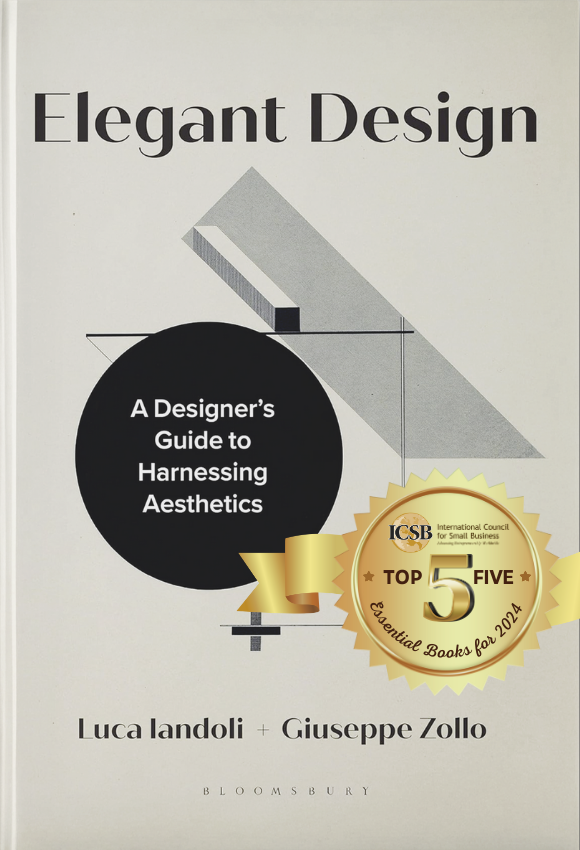
Dr. Iandoli is the Dean of the Collins College of Professional Studies and a Professor in the Computer Science, Mathematics, and Science Division.
Giuseppe Zollo is a professor of business and management at the University of Naples Federico II, School of Engineering and School of Architecture, Italy. With a background in architecture and information science, Giuseppe’s research focuses on complex systems, organizational learning, and sense-making.
About the Book:
Users want simple designs but crave performance. More performance means more complexity. How can designers, inventors, and product managers handle this trade-off? How can they create designs that are quick to process and meaningful, unique, and memorable in an age characterized by constant information overload?
The answer is elegant design. Research insights at the intersection between cognitive science and art studies demonstrate that elegance is a form of ideal complexity sitting between the obvious and the complicated. The book shows how our minds can effectively process visual complexity by using aesthetic pleasure and judgment as a guide. Analyzing the work of great artists and designers from the perspective of how our mind appreciates complexity using aesthetic criteria, Elegant Design identifies actionable aesthetic strategies that will help you design products and user experiences that provide just the suitable complexity, leveraging aesthetic pleasure to deliver meaning and performance.
Four design strategies will help make your product more complex when it is too simple and boring. Another set of four strategies will help simplify your product when it is too complicated and confusing. By iterating between simplification and complexification, you can hit the ideal level of complexity, maximizing users’ aesthetic pleasure.
Following the same approach used in the book’s writing, Luca Iandoli and Giuseppe Zollo will take you on a pleasurable journey through art, design, and history in a beautifully crafted edition featuring more than 100 images, stories, case studies, provocative takeaways, and exercises to stimulate creativity and aesthetic reasoning.
ICSB President Review: The Art of Storytelling and the Power of Innovation
This book is a masterful exploration of a subject as challenging as it is captivating: the pursuit of elegance in design. At its core, the topic revolves around a delicate balancing act—how to achieve peak performance while delivering the ultimate in aesthetics, touch, and emotional resonance. It tackles the profound question of creating designs that excel in utility, beauty, and perception, a harmony encapsulated in the three Fs: Form, Function, and Feelings.
What truly sets this book apart is the authors themselves. They are not confined to a single discipline but embody a rare fusion of talents. As engineers, they bring precision and technical expertise; as business educators and leaders, they offer strategic insight and vision; and as artists, they possess a deep understanding of the subtle nuances that elevate design from the ordinary to the extraordinary. This multidimensional perspective enriches the book, offering readers an unparalleled look into the world of elegant design.
As the authors remind us, elegance is challenging to achieve. It demands more than technical skill or creative flair—it requires a level of introspection, discipline, and patience that few are willing to pursue. It calls for the courage to reject mediocrity and the perseverance to strive for perfection, even in minor details. This is a process, a philosophy, and a relentless commitment to executing at the highest level.
The book delves into the intricate interplay between practicality and artistry through its pages. It explores how great designs are born from meeting functional requirements and evoking a sense of wonder, joy, and emotional connection. The authors illustrate this through compelling examples, weaving together their vast experiences to provide insights that are as thought-provoking as they are inspiring.
Simply put, this book is itself a work of art. It embodies the elegance it seeks to describe, delivering its message with clarity, depth, and sophistication. Whether you are a designer, a leader, or simply someone who appreciates beauty in all its forms, this book will resonate deeply and leave a lasting impression. It is, in every sense, a celebration of elegance—a concept that, though elusive, remains endlessly inspiring.
Be part of the largest and oldest network of small businesses and entrepreneurs in the world.