Insights from the ICSB–OECD Paris Seminar
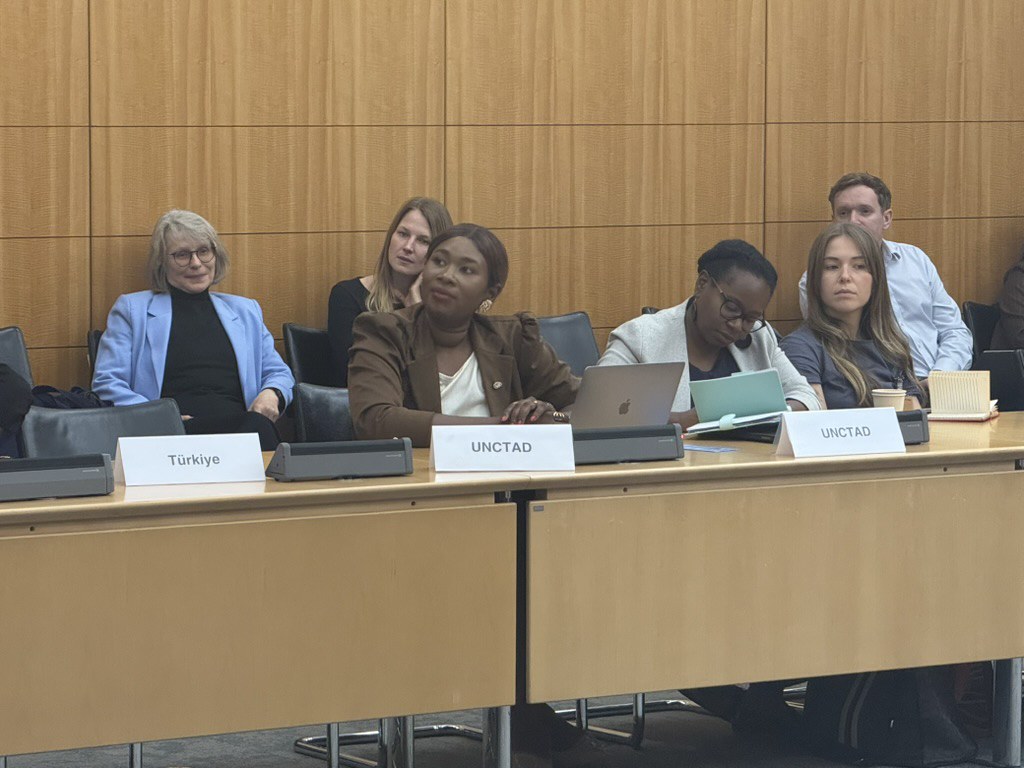
At the ICSB–OECD Seminar on Removing Barriers to Entrepreneurship for Women held in Paris on November 3, 2025, Sonia Nnadozie, Programme Management Officer at UNCTAD, presented key insights from the eTrade for Women initiative and the newly released report, Breaking Down Barriers for Women Digital Entrepreneurs: Insights from Africa. Her message was clear: empowering women in the digital economy is not just the right thing to do—it’s a smart investment in sustainable growth and innovation.
Empowering Women Through Digital Entrepreneurship
Launched in 2019, the eTrade for Women initiative was designed to promote gender equality by supporting women digital entrepreneurs in growing their businesses and influencing public policy. Through mentorship, training, and peer networks, the program has reached more than 450 women-led businesses across 60 countries, equipping them with the tools to navigate and thrive in the digital economy.
The initiative underscores that women entrepreneurs, particularly in the Global South, continue to face structural and societal barriers that limit their potential. These include gender bias, limited access to financing, weak digital infrastructure, and restricted networks—all of which hinder their ability to scale and compete globally.
Insights from Africa: The Promise and the Challenge
Drawing on data from 94 surveyed entrepreneurs and 33 in-depth interviews across 13 African countries, the new UNCTAD report sheds light on the realities of women digital entrepreneurs in Sub-Saharan Africa. It reveals that despite the immense opportunities digital entrepreneurship offers, over 80% of women founders rely on personal savings, highlighting persistent financing gaps and systemic barriers.
Yet the stories behind the statistics reveal extraordinary resilience. Many of these entrepreneurs are not only driving business growth but also delivering community-level impact—from improving agricultural productivity to fostering youth employment and digital literacy.
From Aid to Investment: A Paradigm Shift
In her remarks, Ms. Nnadozie emphasized that supporting women’s entrepreneurship must be framed as an investment, not aid. Women-led enterprises are powerful engines of innovation, inclusion, and impact. She shared examples of entrepreneurs whose participation in the eTrade for Women network has led to measurable community benefits and broader cross-border collaborations.
One such story came from Aïssata Diakité, founder of Zabbaan in Mali, who spoke about her transformative experience through the initiative’s South–South cooperation program. Her study tour in China allowed her to transfer knowledge and technologies back home, strengthening agricultural entrepreneurship in her local community.
Building Inclusive Digital Economies
The Paris seminar highlighted that unlocking the full potential of women in digital entrepreneurship requires a dual approach—empowering individuals while addressing systemic gaps in finance, infrastructure, and networks. Participants agreed that meaningful change depends on multi-stakeholder collaboration—linking governments, private sector partners, and international organizations in joint action.
As Ms. Nnadozie concluded, “Women entrepreneurs are catalysts for impact. Investing in them creates ripples of growth across communities and economies.”
The full UNCTAD report, Breaking Down Barriers for Women Digital Entrepreneurs: Insights from Africa, is available for download here.