Discovering, Building, and Capturing Value — From the Front End of Innovation to Commercial Reality
We live in an era of relentless disruption where the ability to innovate is not a competitive advantage; it is a survival requirement. Yet most organizations repeatedly invest in popular frameworks like Design Thinking and Lean Startup, only to find that enthusiasm wanes and results fall short. The problem is not the frameworks themselves. The problem is that they are poorly implemented, applied without discipline, and disconnected from the rigorous front-end work that drives innovation.
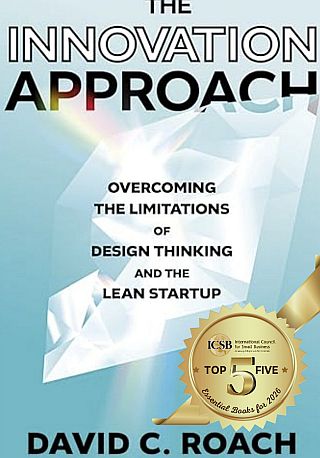
This 3-session professional program, delivered over 3 days, draws on Dr. David Roach’s Innovation Approach to address exactly these gaps. Grounded in four decades of innovation management research and practice, the program provides a structured, evidence-based methodology that bridges value creation and value capture. Participants, whether they are entrepreneurs, corporate innovators, educators, or advisors, leave equipped with the mindset, tools, and process discipline to move from a vague vision to a commercially viable innovation concept.
Friday, March 20, 9:00 AM - 11:00 AM EST (Washington DC)
Understanding Innovation Systems & Overcoming Their Limitations
Why Most Innovation Initiatives Fail Before They Begin
Before any organization can innovate effectively, it must understand the landscape of innovation management, where the dominant frameworks came from, what they do well, and critically, where they fall short. This session provides participants with an honest, research-based audit of Design Thinking and the Lean Startup, establishing the foundation for a more disciplined approach.
Key Learning Outcomes: Innovation systems literacy, Design Thinking and Lean Startup gap recognition, business model fundamentals, personal thinking-style awareness, and the ability to define innovation rigorously.
Saturday, March 21, 9:00 AM - 11:00 AM EST (Washington DC)
The Core Innovation Cycle: From Vision to Fledgling Concept
Executing the Front End of Innovation with Discipline and Rigor
Innovation consistently fails at the front end. A poor concept, regardless of how well it is executed downstream, cannot be rescued. This session delivers the core process disciplines that separate systematic innovators from those who rely on chance: four interconnected steps—Secondary Research, Benchmarking, Primary Research, and Ideation—that together transform a vision into a credible, testable concept. Participants learn that effective secondary research begins with a vision, not a product idea, and focuses on identifying problems, trends, obstacles, and latent customer frustrations rather than just market sizing. Benchmarking is taught not as a competitive intelligence exercise but as a structured exploration of the customer’s next-best option, mapping attributes, features, and benefits to reveal the true basis for differential value.
Key Learning Outcomes: Secondary research and problem framing, competitive benchmarking, customer listening with focus on latent needs uncovering, structured ideation, MVP concept development, and desirability-feasibility-viability evaluation.
Sunday, March 22, 9:00 AM - 11:00 AM EST (Washington DC)
From Concept to Commercial Reality: Advanced Tools and System Capabilities
Scaling Innovation from the Discovery Phase to Alpha and Beyond
Building a great concept is only half the work. Capturing its value requires understanding how innovations are adopted, who the most valuable users are, how sustainability can be designed in from the start, and how the economics of innovation can be assessed with heuristic rigor before costly commitments are made. This session introduces participants to the advanced tools and system-level capabilities that transform a fledgling concept into a scalable innovation. Adoption Theory is applied in practice: participants learn to evaluate their concepts against the five dimensions of adoption—Relative Advantage, Compatibility, Complexity, Trialability, and Observability—using real case studies including Google Glass, medical devices, and aerospace examples to understand why technically superior innovations often fail.
Key Learning Outcomes: Adoption theory application, lead user identification, sustainability integration, innovation helix navigation, team governance, project management fundamentals, and heuristic business modeling.
A
Awareness of Innovation
B
Building Innovation
C
Capturing Value
Investment: $275 per person for the complete ABC of Innovation Management.
As part of the program, all participants will complete the Herrmann Brain Dominance Instrument (HBDI) Survey to understand better their thinking styles and their inclination toward innovation in decision-making moments.
Upon completion, participants will receive an official ICSB Certificate in Innovation Management, validating their capabilities to lead and innovate.
Ready to master the ABC of Innovation Management?