She Helped Give Small Businesses a Voice
Marie-Florence Estimé helped transform small-business policy from an overlooked issue into an international priority. In Paris, her contributions received long-overdue recognition.
PARIS — October 21, 2026
When Marie-Florence Estimé began working on small-business policy at the Organisation for Economic Co-operation and Development (OECD) in 1988, the world’s economic powers were largely focused elsewhere.
 Large corporations dominated economic discussions. Macroeconomic indicators shaped government priorities. Small businesses, despite their importance to employment and local communities, rarely occupied a central place in international policymaking.
Estimé believed that needed to change.
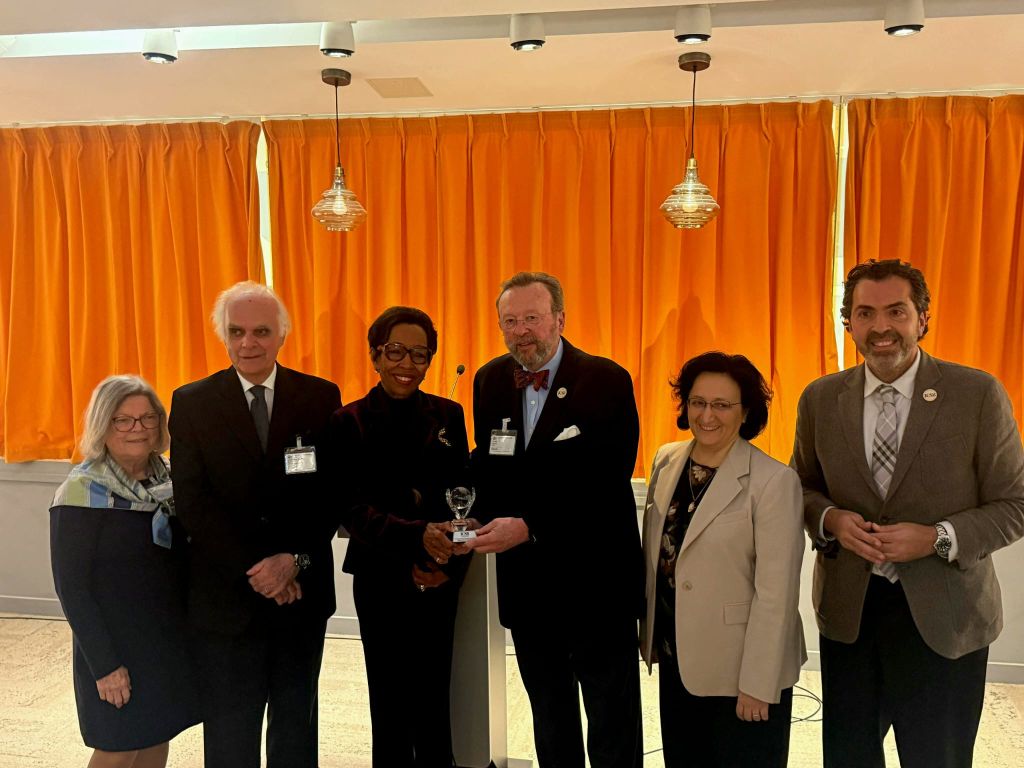
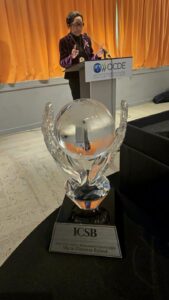
Nearly four decades later, at the OECD headquarters in Paris, the International Council for Small Business (ICSB) honored her with its Global Excellence Award and Entrepreneur Medal, recognizing a career spent helping bring smaller enterprises into the international policy conversation.
But the recognition told a larger story: how ideas once considered marginal can eventually become institutions that shape the world.
When Small Was Not So Beautiful
In 1988, France asked the OECD to examine how its member countries supported small and medium-sized enterprises. Estimé prepared the resulting comparative report, presented in 1989.
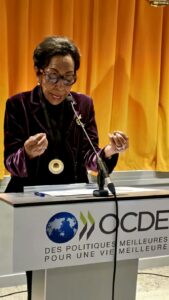
Four years later, the OECD formally established its Working Party on SMEs, giving small-business policy a dedicated international forum. Progress, however, was neither immediate nor universally welcomed. Estimé recalled institutional resistance, competing priorities, and doubts about whether SMEs deserved specialized policy attention. “Small was not so beautiful,” she observed in her acceptance speech.
The challenges extended beyond recognition. Policymakers needed reliable evidence, international comparisons, and a deeper understanding of the barriers facing entrepreneurs.
With colleagues and partners, Estimé helped build that foundation.
In 2004, another milestone followed: the establishment of the OECD Centre for Entrepreneurship, SMEs and Local Development, an initiative she had championed alongside Sergio Arzeni.
What began as an effort to persuade governments that small businesses mattered had developed into a lasting institutional commitment.
The Question Nobody Wanted to Ask
 One of Estimé’s most revealing stories concerned women’s entrepreneurship.
In the 1990s, when advocates proposed an OECD conference devoted to women entrepreneurs, she encountered a question that captured the prevailing attitude: Was women’s entrepreneurship really an issue?
Rather than dismiss the skepticism, Estimé and her colleagues built the evidence.
The OECD organized major international conferences on women’s entrepreneurship in 1997 and 2000, helping bring greater attention to the barriers women faced in starting and developing businesses. The lesson extended far beyond entrepreneurship.
Institutions do not always recognize important problems until someone is willing to challenge what they consider important. As Estimé reflected in Paris: “An idea never becomes an institution through one person alone.”
She credited the researchers, policymakers, colleagues, and governments who helped advance the work, emphasizing that lasting progress requires persistence, partnerships, and the willingness to overcome resistance.
A Partnership Across Generations
The Paris recognition also marked a reunion between Estimé and ICSB.
In 2008, she represented the OECD at the ICSB World Conference in Halifax, Canada, delivering a keynote address on removing barriers to entrepreneurship and encouraging innovative SMEs. Eighteen years later, she returned to an ICSB gathering, this time as an honoree.
For Ayman ElTarabishy, ICSB’s President and CEO, her story carries a personal significance. The effort to establish the United Nations’ annual Micro-, Small and Medium-sized Enterprises Day similarly required years of work, institutional collaboration, and a belief that smaller businesses deserved greater international recognition.
Both journeys demonstrate how meaningful change often begins with individuals willing to build something that will outlast them. As ICSB approaches the tenth anniversary of UN MSMEs Day in 2027, Estimé’s career offers a timely reminder of the importance of those who create and sustain institutions.
More Than Economic Growth
Estimé’s message was not simply about the past.
She spoke about the challenges confronting today’s entrepreneurs: geopolitical uncertainty, technological disruption, climate change, and the growing divide between businesses capable of adapting and those without sufficient resources.
But she also challenged a familiar assumption about entrepreneurship.
“SMEs are not all destined to become large firms, nor do they need to,” she said.
Small businesses contribute to communities, social cohesion, employment, and opportunity. Their value cannot always be measured by how quickly they grow.
It is a perspective increasingly reflected in Human-Centered Entrepreneurship, which examines how entrepreneurial activity can contribute to human well-being and flourishing alongside economic performance.
For Estimé, the importance of smaller enterprises has always extended beyond statistics.
Their success matters because people and communities depend on them.
The Legacy of a Builder
The institutions now shaping international SME policy can appear permanent, their existence almost taken for granted.
But they were not inevitable.
They emerged because individuals like Marie-Florence Estimé challenged assumptions, built alliances, and continued working when recognition was uncertain.
At the OECD in Paris, ICSB celebrated not only her distinguished career but also the often-invisible work of turning an idea into a lasting institution.
Nearly forty years after she began making the case for small businesses, that argument has become part of the international policy mainstream.
Some people build businesses. Others build the institutions that give millions of businesses a voice.
Marie-Florence Estimé helped build the latter.
Based on Marie-Florence Estimé’s remarks delivered at the OECD in Paris on October 21, 2026, upon receiving the ICSB Global Excellence Award and Entrepreneur Medal.
Download the full speech: Marie-Florence_Estime_ThankYou-SPEECH_ICSB_OECD