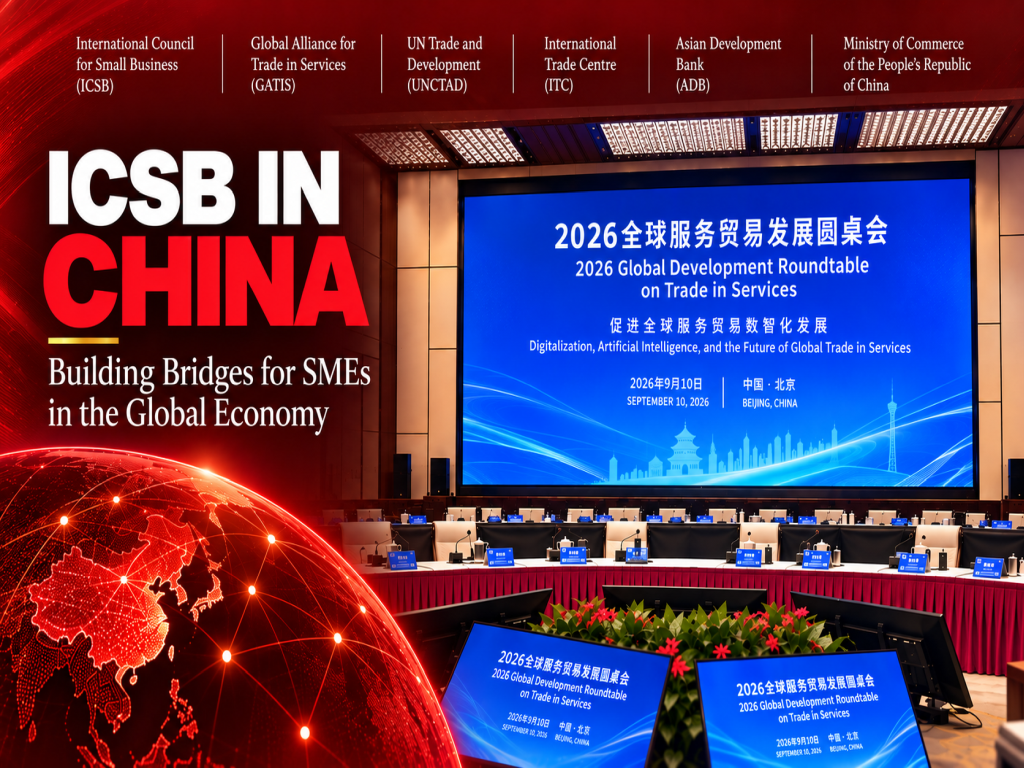
Reporting on remarks by Professor Ki-Chan Kim, Chair of the International Council for Small Business, at the Roundtable on Global Services Trade Development, September 10, 2026.
China has become an important place for a new conversation about the future of small business, global trade, artificial intelligence, and international cooperation. ICSB is part of that conversation.
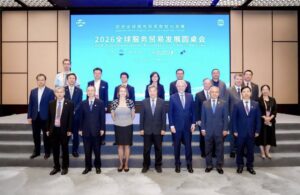
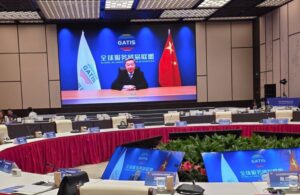
On September 10, ICSB Chair Professor Ki-Chan Kim joined Jiang Zengwei, President of the Global Alliance for Trade in Services (GATIS) and former Vice Minister of Commerce of China, alongside leaders and experts from UN Trade and Development (UNCTAD), the International Trade Centre (ITC), the Asian Development Bank, and China’s Ministry of Commerce. The roundtable also brought together representatives from IBM, Marriott International, and Uniqlo, as well as experts from Africa and Latin America.
It was an unusually broad table: government, international organizations, business, academia, and organizations representing entrepreneurs and SMEs.
But the discussion was not simply about increasing trade volume. It centered on a larger question:
How do we make the global economy work for entrepreneurs and small businesses?
 Technology lowered the borders; regulation did not
Professor Kim brought a distinctly ICSB perspective to that question.
Digital technology and artificial intelligence have made it possible for even very small firms to reach customers worldwide. A small company can provide consulting, design, education, software, marketing, and specialized professional services across borders without a local office, heavy capital investment, or an international distribution network. A generation ago, that was unimaginable.
Regulatory borders, however, have not moved at the same speed.
Rules governing data protection, cybersecurity, electronic identity, digital payments, consumer protection, and conformity assessment still differ from one jurisdiction to another. A technically simple transaction can therefore become commercially difficult or even impossible.
Large companies can absorb much of this complexity. They can build compliance teams and respond to regulatory requirements market by market. SMEs often cannot. For a small company, the cost of understanding and complying with another regulatory system can become a barrier to entering that market.
Artificial intelligence sharpens the problem. Small firms increasingly use AI for translation, customer service, marketing, logistics, and management. Yet requirements surrounding transparency, accountability, risk, and human oversight vary across jurisdictions. If that fragmentation is left unmanaged, digital transformation risks widening rather than narrowing the gap between smaller firms and large incumbents.
As Professor Kim argued, the problem is not simply that regulations differ. The problem is fragmentation. The bridges connecting different systems are missing.
 Three bridges
His answer was not to make every country the same.
It was to build bridges.
The first is mutual recognition. Electronic signatures, professional qualifications, certifications, test results, and competency assessments should increasingly be recognized across jurisdictions and institutions. Mutual recognition does not mean lowering standards. It means avoiding the cost of repeatedly proving the same thing.
The second is interoperability. Systems do not have to be identical to work together. Common terminology, compatible technical systems, trusted information exchange, and international standards can allow different systems to connect.
Professor Kim captured the principle simply:
“The important thing is not to become the same, but to make it possible to work together even if they are different.”
The third is participation. SMEs comply with a great many standards, yet they are too often absent from the rooms where those standards are developed. Small businesses should not simply be the subjects of rules created elsewhere. They should participate in creating them.
From principle to practice
The discussion points toward three practical tasks. 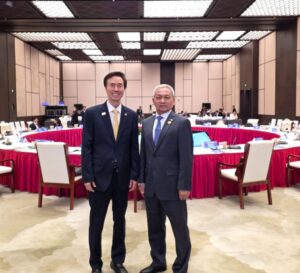
First, trade authorities, regulators, standards bodies, international institutions, and SME organizations need regular cooperation mechanisms rather than occasional contact.
Second, new digital regulations and standards should include an SME impact assessment. The question should not only be whether a rule achieves its policy objective. Policymakers should also ask whether a small firm can understand the rule, comply with it, and remain competitive.
Third, progress can begin in specific areas rather than waiting for comprehensive international agreements. Electronic signatures, digital business certification, cybersecurity, and professional qualifications are areas where mutual recognition and interoperability can advance now.
Underlying all three is a change in sequence. Firms have traditionally been encouraged to identify a market first and deal with standards and certification later. That can leave a company with an opportunity it cannot pursue because it cannot satisfy the market’s requirements in time.
Market readiness and standards readiness need to develop together.
The principle behind it all is particularly important for SMEs:
International standards should become infrastructure that helps small firms reach markets, not another barrier that keeps them out.
 What success should be measured by
Ultimately, Professor Kim brought the conversation back to entrepreneurship.
Entrepreneurship is not simply the founding of companies. It is the process of discovering opportunities, creating innovation, pioneering markets, and developing human potential.
That means global trade success cannot be measured by trade volume alone.
How many entrepreneurs gained an opportunity?
How many SMEs were able to participate in the global market?
How much human potential grew because they were able to participate?
Professor Kim placed those questions at the center of the discussion.
A single global regulatory regime is neither possible nor desirable. What the world needs is not regulation without borders, but trust that can carry across borders. SMEs should not merely participate in the digital economy as users of systems designed by others. They should have a voice in shaping the rules of the global marketplace and share in the opportunities those rules create.
ICSB will continue showing up wherever those conversations are happening.
Across borders. Across institutions. Across different economic systems.
Because international cooperation does not require everyone to be the same.
It requires us to keep building bridges.
A note from ICSB
ICSB works across regions and institutions. We engage governments, United Nations organizations, universities, standards organizations, international institutions, and companies wherever decisions affecting entrepreneurs and small businesses are being discussed.
Our participation in China is one example of that work. More will follow in the months ahead, in other regions and with other partners.
Our commitment is to the entrepreneurs and small business owners who must operate across all of these systems, whatever their differences. Our role is to connect, convene, and ensure that small businesses have a voice wherever decisions affecting their future are made.
Ayman ElTarabishy
President and CEO
International Council for Small Business